Fractional CTO for a venture debt lender
Venture debt lender
On-call technical leadership for a venture debt lender: technical due diligence on investment targets, M&A advisory, and periodic technology audits across the portfolio.
case study
Climate fintech startup
Technology leadership for a company operating at the intersection of blockchain, financial regulation, and commodity markets
Client identity and commercially sensitive detail are withheld under the confidentiality terms of this engagement.
Challenge Launching is the easy part. What follows is harder: growing an engineering team, expanding the product, and managing a stack that now runs under several regulatory regimes at once - in a blockchain landscape where a protocol decision made today carries custody and compliance consequences for years. The founder's background was in banking and capital markets. Deep domain expertise in the commodity and its regulation, but not in engineering leadership or long-term technology architecture. As the company raised further capital and widened its product scope - new token structures, secondary market expansion, wholesale customer onboarding - it needed a senior technical voice at the leadership table who could own technology strategy and convert it into clear engineering direction. The regulatory picture added a dimension most fractional CTO engagements never face. The business held a financial services licence, was registered for AML/CTF obligations, and carried custody duties to a national registry. Every product decision - a new token structure, a change to minting logic, an additional exchange listing - had potential regulatory implications the engineering team needed to understand before writing code.
Approach The engagement ran across four areas: roadmap ownership, engineering team development, regulatory technology guidance, and fundraising support. Roadmap ownership meant sitting alongside the founder in strategic discussions - product prioritisation, build-versus-buy calls, and sequencing technical work against fundraising milestones. Decisions that looked like product decisions ("should token retirement happen directly in the platform?") were almost always also compliance decisions ("what does that require from the contract, the registry integration, and the audit trail?"). Having a CTO-level voice in those conversations is what stops a team shipping features that create downstream regulatory complexity. Engineering team development meant defining the roles the company needed, running the hiring process, and establishing the practices - code review, deployment process, incident response - that a regulated financial product requires. A licensed business building on public blockchain infrastructure cannot run on the engineering habits of an early-stage web product. Regulatory technology guidance meant acting as the interpreter between compliance obligations and daily engineering work. When the AML/CTF regulator updated its transaction monitoring guidance, we translated it into concrete system changes. When the contract needed modification for a new token structure, we assessed the custody and audit trail implications before any code was written.
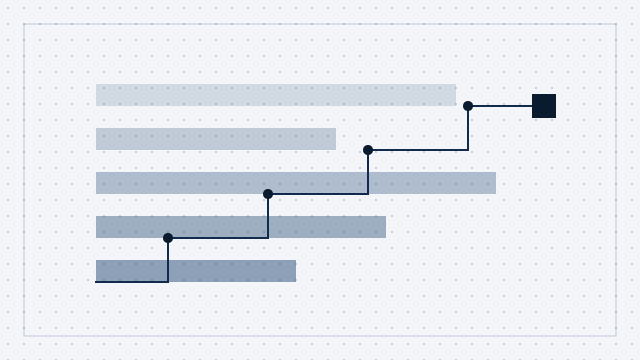
Solution As Fractional CTO we delivered: Technology roadmap - a twelve-month roadmap sequenced against fundraising milestones and regulatory obligations, with each initiative documented against its technical approach, compliance considerations, effort estimate, and dependencies. Engineering team structure - defined the roles for the next phase, wrote the requirements, ran the hiring process, and onboarded the hires into the existing codebase and practices. The team built under this engagement now owns and extends the platform independently. Smart contract governance framework - documented decision criteria for contract changes, testing requirements before any mainnet deployment, the multisig structure controlling minting authority, and the process for engaging external contract auditors. For an immutable financial product on a public chain, the governance around contract changes matters as much as the code. Investor technical due diligence support - prepared the technical sections of investor materials, fielded technical questions through diligence, and documented the architecture in a form sophisticated fintech and climate investors could evaluate directly. Regulatory change monitoring - a standing process for tracking relevant regulatory developments and translating them into technical implications for the platform each quarter.
Results The company completed a further funding round with our technical diligence support contributing to investor confidence in the architecture and regulatory posture. The engineering team hired and onboarded during the engagement owns the platform independently. The contract governance framework has been followed without incident - no unplanned mainnet deployments, no audit findings requiring emergency remediation. What this engagement demonstrates: fractional technology leadership that holds up under real regulatory weight - owning the roadmap, building the team that replaces us, and making sure compliance shapes engineering decisions before they are made rather than after.
case studies
Explore our case studies showcasing scalable architectures, AI-driven solutions, and modern engineering practices.
Venture debt lender
On-call technical leadership for a venture debt lender: technical due diligence on investment targets, M&A advisory, and periodic technology audits across the portfolio.
Listed payments company
Embedding at C-suite level to lead the re-architecture of a listed payments business: a single canonical ledger service, a unified API contract layer, and a move from hybrid to fully native mobile.
Cloud-native core banking platform
Providing in-market technical leadership for a global core banking platform entering Australia - owning client implementations end to end, from ledger architecture and card program setup to the regulatory evidence local institutions require.